|
NOAA and NWS host Spotter Training
Class at Lincoln Christian Church
[April 02, 2026]
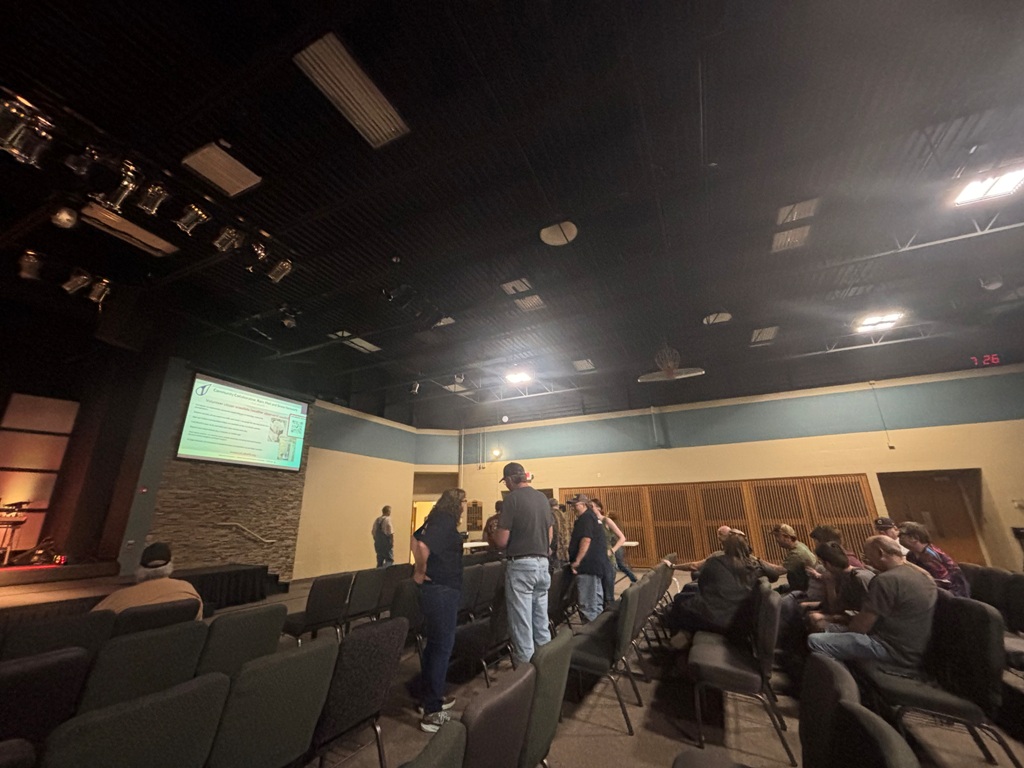
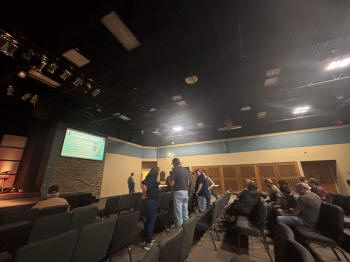
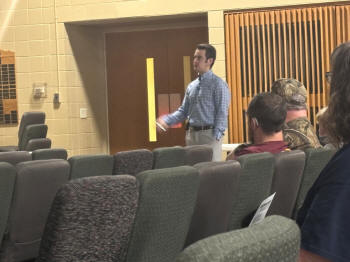
On Tuesday evening, about 50 people
gathered at Lincoln Christian Church to learn how to spot severe
weather. Several attendees were members of local fire and rescue
departments.
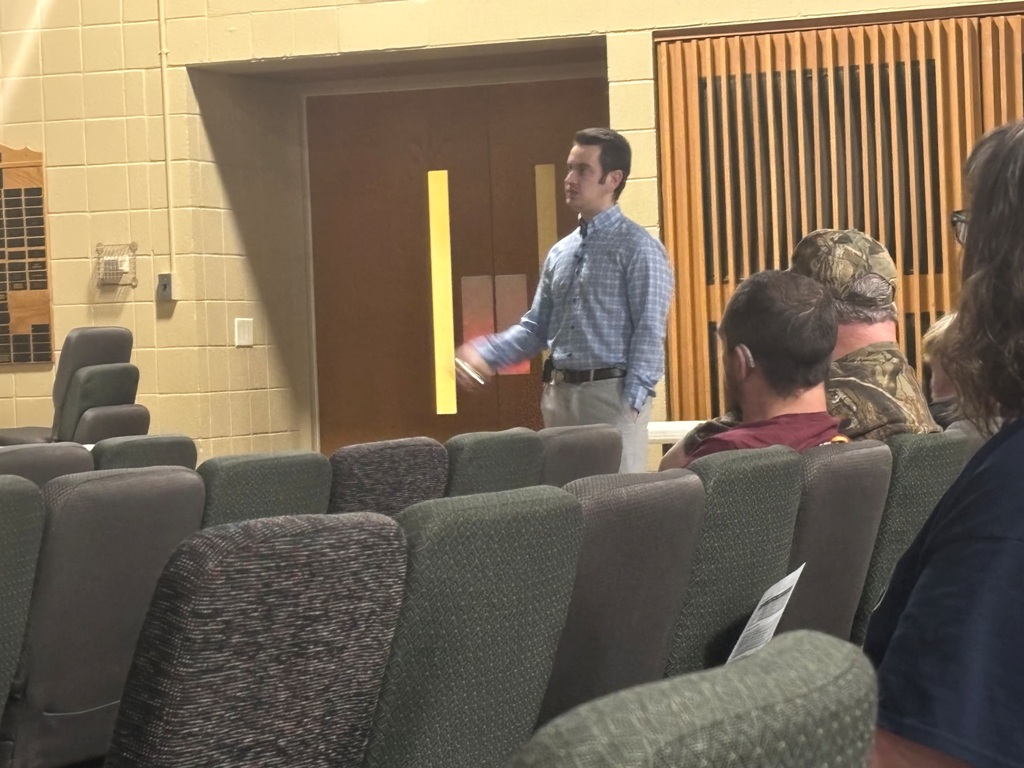
Meteorologist Alex Erwin of the National Weather Service began by
explaining the important role that spotters play in issuing public
warnings. Spotter reports make the warning process more accurate and
add credibility to the warnings. This makes people more likely to
act when a storm is moving in.
Erwin moved on to provide a basic overview of how a weather radar
works and how to interpret radar images. He then discussed the key
ingredients for storm development: moisture, lift, instability, and
wind shear. This discussion transitioned into the types of storms
and their severity. For each storm type, Erwin discussed expected
damage, wind speeds, hail sizes, and showed examples of what the
storms look like on radar.
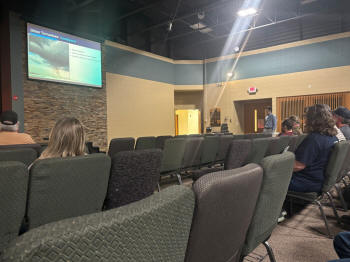
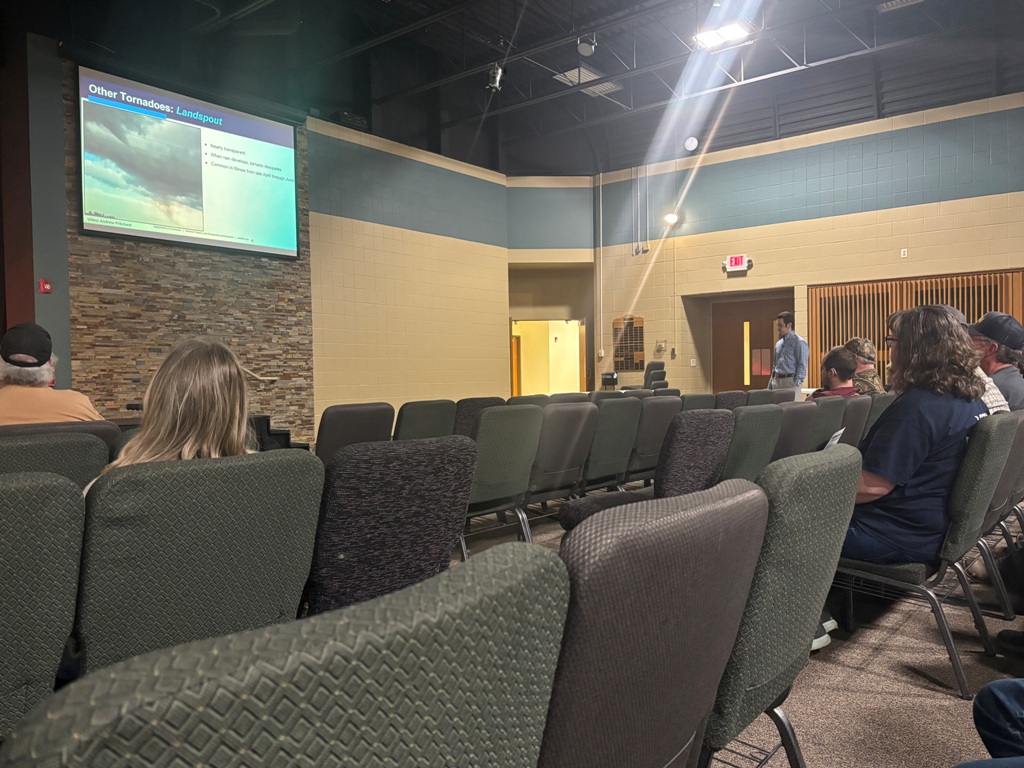
After laying the foundation for the course, Erwin discussed the
lifecycle of a tornado, showing photo and video examples of
tornadoes in each state. He explained how to interpret the radar
images to locate potential rotation and how to spot rotation in real
life. He also noted the types of clouds commonly mistaken for
tornadoes.
After a short break, Erwin began providing information that spotters
should look for to gauge the potential for severe weather. The
resources include the National Weather Service’s Daily Briefing at
weather.gov/ilx and reports from the Storm Prediction Center. These
reports cover forecasts for tornadoes, wind, and hail; they predict
location, probability, and intensity. He also covered the warning
system.
[to top of second column] |
Before moving on
to test the crowd's knowledge, Erwin discussed safety while
spotting. He warned that nighttime spotting is very difficult
and dangerous. Flash flooding can sweep a vehicle or cause
washouts that can trap it. He warned against sheltering under a
bridge because it can increase winds and funnel debris. He also
advised spotters should not go alone. One spotter should focus
on driving, while the passenger focuses on spotting and
documenting the storm. He encouraged spotters to stay alert for
EMS vehicles and pedestrians and to respect law enforcement.
After reviewing spotter safety, he shared how spotters can
report their findings and what information should be included in
their reports.
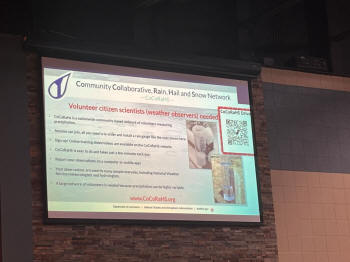
The interactive portion of the course included several True or
False and multiple-choice questions. Then Erwin presented
several videos, forecasts, and radar images and encouraged
participation in walking through the scenario that spotters at
different vantage points might encounter.
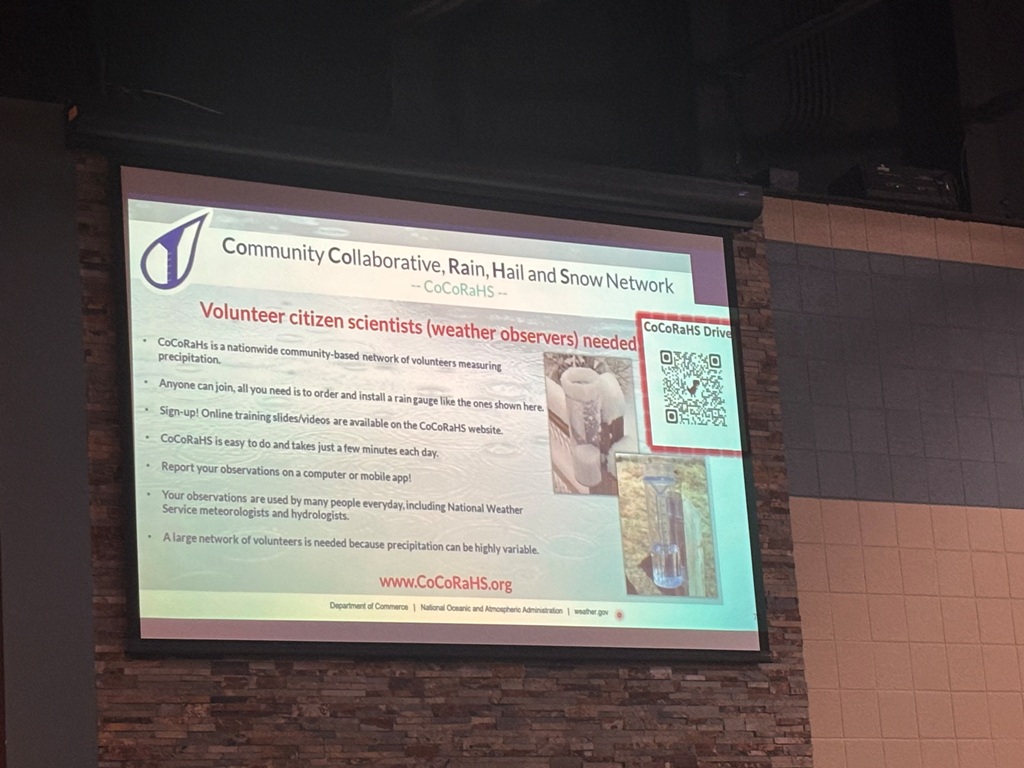
Erwin took a few questions from participants. The evening ended
with applause for Erwin. To find a spotter course or more
weather information, visit:
weather.gov.
[Joli Boerma]
 |