|
Lincoln Planning Commission
approves rezoning of former Lincoln College campus
[May 08, 2026]
On Thursday, May 7th, the City
of Lincoln Planning Commission held a meeting to discuss the
rezoning of the former Lincoln College campus from residential to
commercial. The meeting was held in response to a potential buyer of
the campus seeking to renovate it. Developer Chase Huston would like
to turn the former residence hall buildings into affordable housing
and lease the other buildings to potential businesses and programs
that want to come to Lincoln.
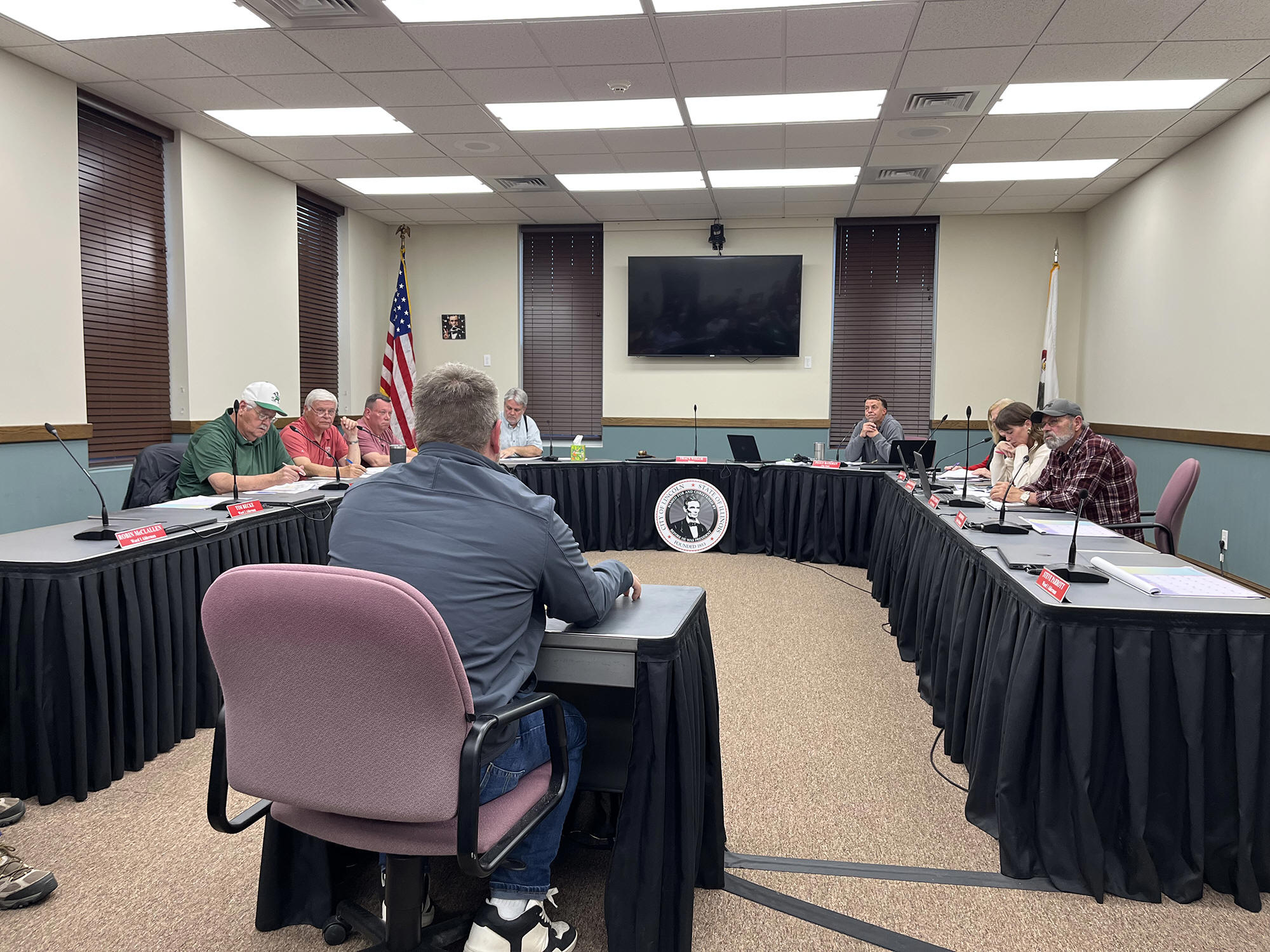
Six of the members of the
commission were present including Molly Pickering, Morris Trent,
James Wessbecher, Robert Coombs, Lori Blees, and Vic Martinek. The
meeting started just after 6:00 p.m. and was located on the second
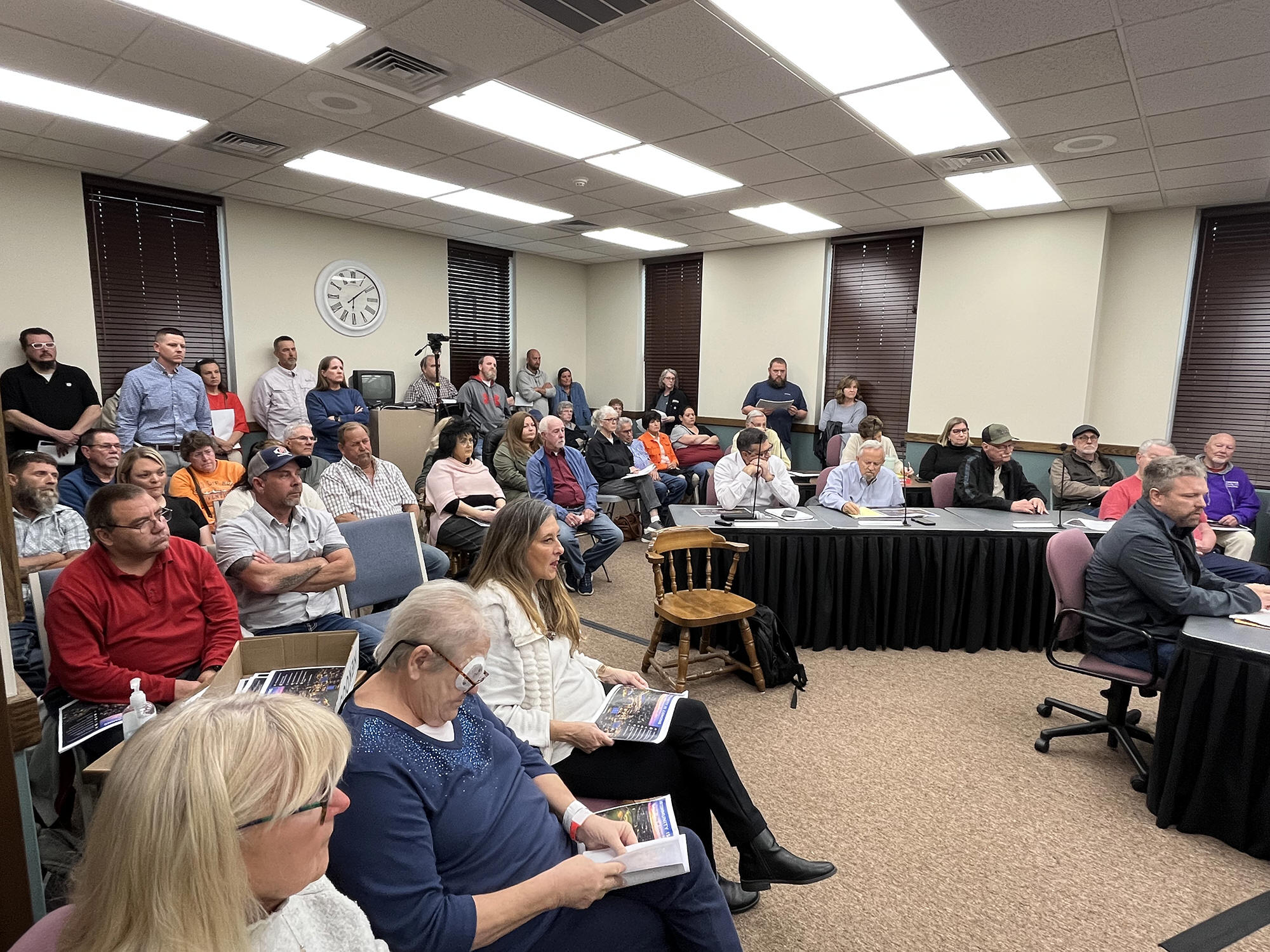
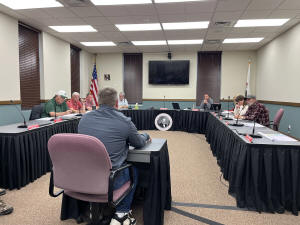
floor of the City Hall Building. The room was packed, with dozens of
residents present to voice their opinions on the matter. Many extra
chairs had to be brought in. Every seat was taken and several people
had to stand, with some not being able to get into the room left
standing in the doorway.
The meeting kicked off with Wes Woodhall calling for a motion to
approve the previous month’s meeting minutes. They were approved and
the commission moved on to their only other agenda action item, the
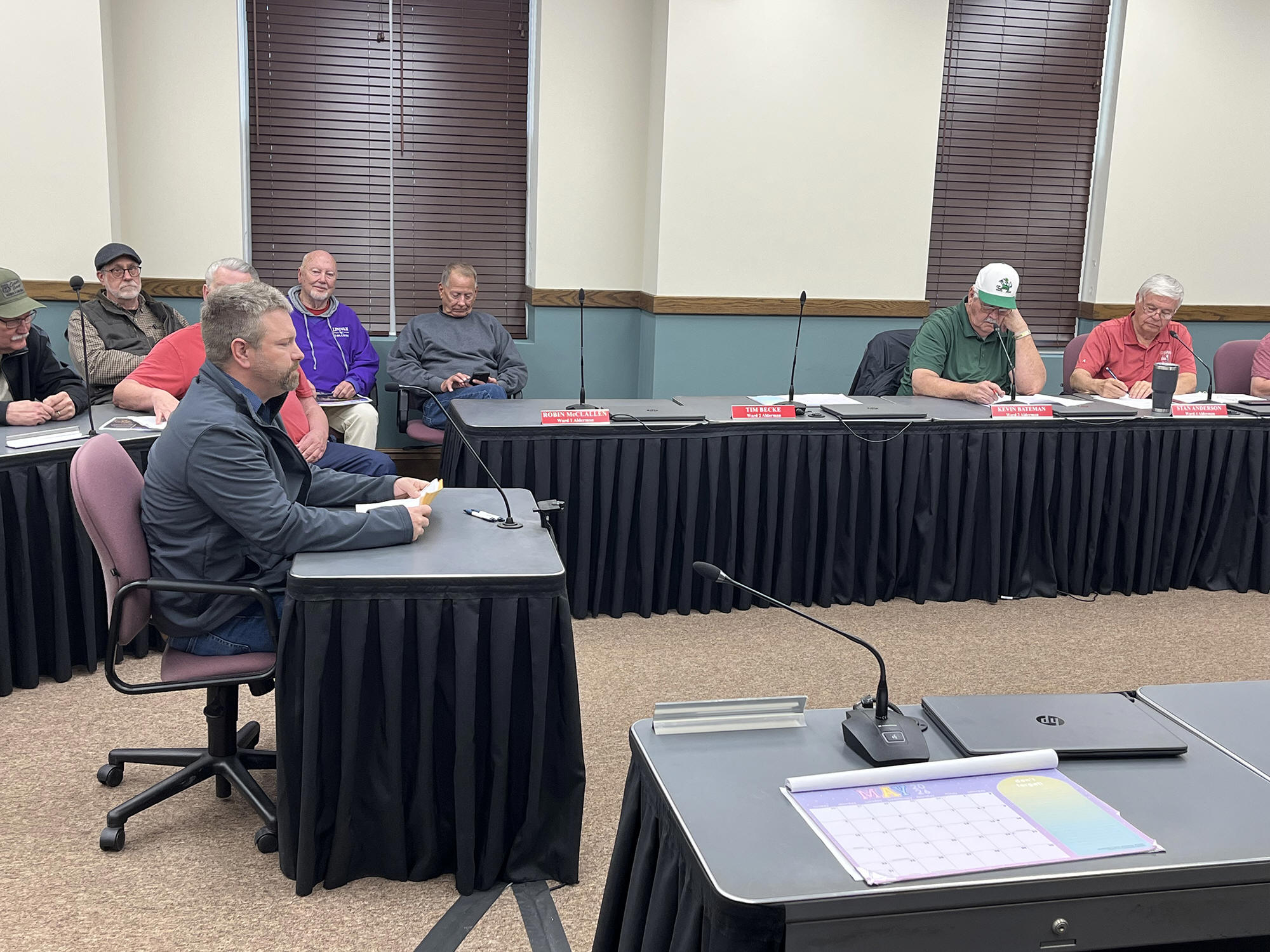
rezoning request. They invited Huston to come sit before the
commission and speak on the project.

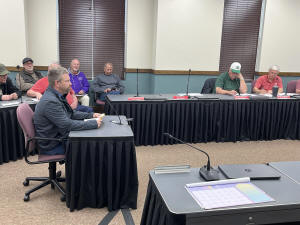
Huston started by stating that he
wanted the property to be rezoned to C-2 specifically, as this would
allow him to do all the things he wants to do with the property. He
then spoke on himself a bit, stating that he lives in Washington
state and is a senior engineer designer with Boeing. He stated that
he has been developing real estate in Lincoln for about a decade and
thinks of the town as his second home. Huston said that he has taken
a lot of properties, many of which are apartments, in town and has
renovated them to make them better. He added that he owns nearly 100
rental properties in Lincoln, and that he does not put any of the
money he makes into his own pocket, rather reinvesting that money
into the community.
Huston addressed a concern that he has seen making the rounds on
social media. He assured the commission and everyone in attendance
that the apartments he is proposing are not Section 8 housing, nor
are they government funded.
He added that he wants to work with groups that are aligned with his
interests. He does not want gambling machines or bars. Rather, he
wants to attract businesses that Lincoln could use more of, stating
later in the meeting that opening a day care is at the top of his
list of priorities.
The public was then allowed to ask questions or make comments. There
seemed to be an even number of comments in support as well as those
against the rezoning, and the project as a whole. Scott Warner was
the first to speak. He called Huston’s proposal a lot of “razzle
dazzle,” pointing to the fact that he does not yet have any
contracts signed with any potential businesses. He additionally
called Huston’s request “spot zoning,” encouraging the commission to
vote against it. Warner also brought up several questions about the
financial state of the college, saying that he does not feel the
commission has done enough to investigate this matter before selling
it off. He ended by stating that he feels rezoning would open the
community to future problems if Huston’s vision falls through,
saying that it would “haunt you and every citizen of Lincoln
forever.”
Patrick Dooling, president of the Lincoln College Board of Trustees
was the next to speak, saying that the board has been marketing the
campus since it closed in May of 2022. Doolin shared that there have
been a lot of offers, but that they have all fallen through. While
these groups were interested in parts of the campus, none of them
were interested in purchasing the entirety of the campus. The board
was not wanting to break up the campus and sell it individually,
hence why these deals have been falling through.
Doolin additionally said that money that was made available for the
college to help it close are the funds that they have been using to
keep the grounds maintained. That money, according to Doolin, is
running out, however. The board decided that, were there to be no
buyers by a certain date, the board would put the campus up for
auction. The board would have no control over who bought the campus
or what they did with it. They had a date for the auction
determined, and then Huston came in with his offer.

Spring Hyde was the next to speak.
She was a professor at the college when it closed, and lives very
near to the campus. She stated that she had to pay for her own
insurance, accept the college not providing contributions to her
retirement, and had the college ask her and her colleagues to donate
their salaries back to the campus. She said these things to state
that her home is her investment for her future. She voiced concern
about things such as light pollution and noise pollution that could
come as a result of the project, causing her property values to
diminish. She was also wary of a McDonalds opening on the campus and
hearing weddings held on the campus from her home.
Jackie Baker spoke next, sharing that she also lives down the street
from the campus. She asked about the 4th Appellate Court voting to
keep Lincoln College property tax exempt. Doolin spoke on this,
stating that the County Assessor “took it upon herself” to see about
having the college start paying property taxes after their closure.
He continued, saying that the court ruled the assessor did not have
the authority to do this, as the tax exempt status was set by a
charter from the 1800’s and they had been “grandfathered in” ever
since. He did say that, unless the buyer of the campus were to turn
it into a non-profit, their tax exempt status would go away after
the sale.
John Blackburn, president and secretary of Lincoln College spoke
next. He also served on the board of the college for 25 years.
During that time, he said he only knew of other board members
wanting to do something positive with the college. He also mentioned
that people’s property values will decrease if the college runs out
of money, the grass is unkept, and the buildings become boarded up.
He thanked Huston for “taking a risk” on this project.

[to top of second column] |

The next commenter spoke on her
hesitation, but reluctant acceptance of the project. She stated
that she knows change can be scary, but that everything has to
start somewhere. She also stated that she knows uninhabited
buildings deteriorate quicker than inhabited ones. Next, she
commented on the poverty rates in Lincoln, stating that the
poverty rate of the town is 17 percent, while the state average
is only 11.8. She stated that the vacancy rate in Lincoln is
under ten percent, calling housing a “huge issue” when people do
not have the money to make a down payment on a house.
She then asked Huston if he had considered prices for the
apartments yet, and he informed her that he had. He said that
each apartment would have all amenities, such as electricity and
internet, included, also adding that they would be getting their
power from an eleven-acre solar farm. Huston said that a one
bedroom is planned to be $750 per month, and two bedrooms $850.
He said that he has been getting phone calls daily from people
in Lincoln looking to move into one of his rental properties,
which he shared are all at capacity. Huston also said that he
has been getting about one call a week from people outside
Lincoln inquiring about vacancies.
Hyde then spoke again, asking why the commission could not just
rezone the campus to allow Huston to renovate and rent out
apartments first. If that worked, Hyde said, the commission
could then allow for the full rezoning at a later date.
Blackburn addressed this comment, stating that Huston was not
going to buy the entirety of the campus if he was only going to
be able to use four of the buildings. The two had a bit of a
back and forth before the next commenter, Susan Howe, spoke.
Howe asked Huston about the previously mentioned solar farm,
claiming that the Trump administration is pulling funding for
these kinds of projects and that all the solar farms are going
to be shut down. Doolin corrected Howe, stating that the cut in
funding will keep new solar farms from being built, but will not
shut down existing ones. He also stated that the college has a
twenty-year agreement with the solar farm to be able to purchase
the energy at a heavily reduced rate.
The next commenter compared Lincoln to Morton, where some of her
family lives, saying that the towns are quite different. She
also spoke down on the gambling businesses in Lincoln, calling
them “pretty much a tax on the poor.” She asked Huston if he
would be allowing more gambling businesses in town, and he
reiterated that he would not.
Jan Dickerson spoke next, stating that the Evergreen properties,
that Huston purchased after their previous owner’s death, were
not run down when he acquired them. She also called his
handwriting “barely legible.”

Local real estate agent Ty Tucker
spoke next. He attested to Huston’s character, stating that he has
been working with him as he has acquired properties over the last
eight years. Tucker also stated that he feels Huston has improved
the properties, raising their property values. He called Huston a
“fantastic person.”
This was the end of the public
comments, and the planning commission members were allowed to ask
questions of Huston. Pickering started, asking if he has any other
investors. Huston stated that he does have one but declined to give
the person’s name. Pickering also asked about any contingency plans
that are in place if the project does not pan out. Huston stated
that he is not worried about the apartments, as they have plenty of
experience renovating these. His bigger concern is the commercial
side of things, as they are not as experienced.
Trent then asked about a timeline for the project, and Huston stated
that he expects the apartments to take about a year and a half to
renovate. Trent called the timeline “not realistic,” while Huston
stated that there are hundreds of units that would need to be
renovated.
Coombs next asked about how many apartments would be available once
the project was finished. Huston stated that the number was
originally 271, but that the number had changed. He did not have the
official number but stated that most of them are going to be two
bedroom apartments. Coombs then asked about their Americans with
Disabilities Act (ADA) compliance, to which Huston stated that all
of them would be.
Trent spoke again, asking Huston about any plans to sell the
property. Huston stated that there are no plans. He said that it was
discussed as a worst-case scenario plan, but that would be if the
buildings were left uninhabited for years with no interested
parties.
Coombs had another question, asking about how many different
companies that he is working with that might have interest in
inhabiting some of the buildings. Huston stated that they are having
“serious talks” with five companies.
Wessbecher then asked about the parking situation, inquiring if the
street parking would be enough. Huston stated that, for starters,
once they start getting people moving in, it should be, but that
there are plans to expand parking if needed. He stated that, with
the hundreds of students that used to live on the campus, it is
likely that there is already enough parking on the campus.

Wessbecher also asked about why
Huston chose C-2 specifically to have it rezoned as. Huston stated
that he is hoping to bring in some baseball teams, stating that he
is hoping to make Lincoln a “baseball hub.” This being the case, he
would have to have it rezoned as C-2 to add some of the things he
would like to do the baseball field. Seeing as how Lincoln is
situated relatively close to four major league teams, Huston said,
he was told that Lincoln could be a great community for companies
and teams to come in and get established. Doolin added that there
were many sports and entertainment inquiries that fell through,
adding that two of the entities are still interested.
Martinek then made a motion to approve the rezoning request. The
motion was seconded and a vote was taken. It passed in a vote of
4-2, with Wessbecher and Trent being the two ‘no’ votes. With the
motion passing, Woodhall entertained a motion to adjourn, and the
meeting swiftly came to an end.
[Matt Boutcher]
|