|
 Holiday
Plant Legends and Lore Holiday
Plant Legends and Lore
By Melinda Myers
[December 20, 2025]
The holidays
are here and you are probably seeing many traditional holiday plants
for sale at your favorite flower shop and garden center. These may
or may not be part of your holiday traditions but knowing a bit
about their lore can be something fun to share at holiday
gatherings.
The traditional carol “The Holly and the Ivy” mentions two of the
evergreen plants associated with the holidays. Ivy, holly and
mistletoe were three green plants that brightened the deciduous
British forests in winter. |
Winter greenery was prized for its
beauty and symbolic assurance that spring would come again. Ivy
along with holly and mistletoe were the standard holiday decorations
for homes and churches before the Christmas tree.
English ivy is a popular houseplant that thrives in a bright
location. Purchase or train English ivy into a wreath or tree for
the holidays. Or grow it on an obelisk or orb and enjoy its
year-round beauty.
Outdoors, English ivy is used as a groundcover or trained on a
trellis or home for vertical interest. It is considered invasive in
some parts of the United States, so check before adding this plant
to your landscape.
The tradition of kissing under the mistletoe started in England in
the 19th century. According to mistletoe etiquette, a man should
remove a berry each time he kisses a woman. And when the last berry
is gone, the kissing is over.
This parasitic plant was believed to have magical powers since it
seemed to mysteriously appear in tree canopies and grow without
roots. What original observers did not realize is fruit-eating birds
deposited seeds in the trees. Once the seeds sprouted, they formed a
parasitic relationship with the tree.
Mistletoe hunting is one traditional way this high-hanging plant has
been harvested. Hunters take aim and shoot. Unfortunately, some of
the mistletoe can be blown to pieces, adding to the challenge of
this harvesting technique.

Some cultures believed mistletoe could cure diseases, bestow
fertility, and protect homes from ghosts. The Druids used branches
of mistletoe to welcome in the New Year and thus the plant became
associated with Christmas.
Be sure to hang your mistletoe high or opt for the artificial sprigs
as the berries are poisonous to people and pets.
[to top of second column] |

You may be surprised to know
Wassailing is another plant-related tradition. In England, people
would visit apple orchards caroling along the way. Once there, they
would sprinkle cider or liquor over the trees’ roots while chanting
to help ensure a good crop the coming year.
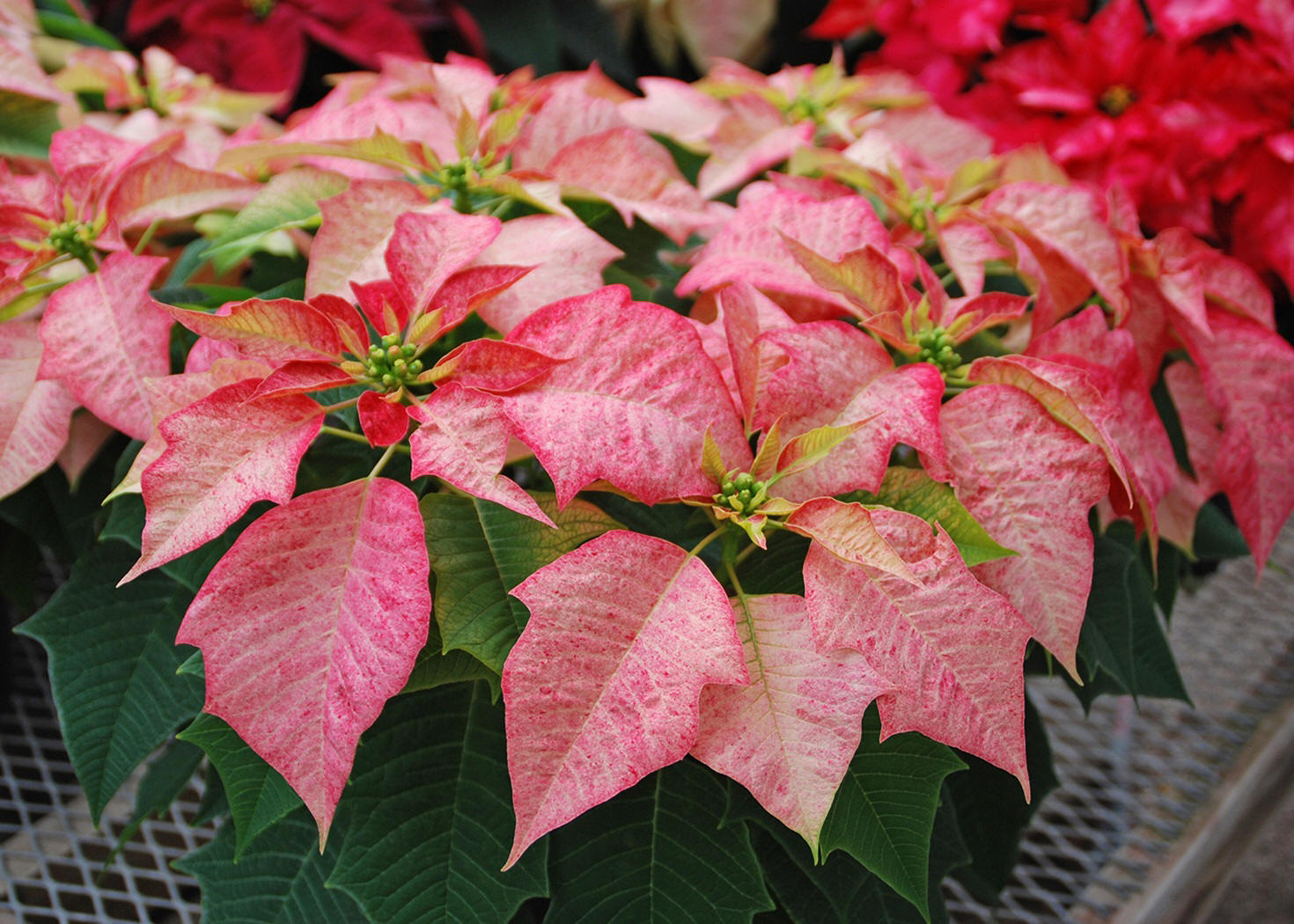
You may have already purchased a poinsettia or two to give or
decorate your home. It was once cultivated by the Aztecs who called
it cuetlaxochitl and used its colorful bracts for dye and the milky
sap as medicine. The name poinsettia comes from Joel Poinsett, a
U.S. Ambassador to Mexico in the 1820s, who happened upon a blooming
poinsettia shrub and brought cuttings back to the United States.
The legend of the Poinsettia is also of Mexican origin. It is said
on the first Christmas two small children wanted to visit the baby
Jesus but were too poor to buy him a present. So, they picked weeds
along the road to decorate his crib. The other children made fun of
their gift, that is, until their gift of love, turned a beautiful
red.
Take time to enjoy family, friends and of course your favorite
holiday plants and traditions.
Melinda Myers has written more than 20 gardening books,
including the Midwest Gardener’s Handbook, 2nd Edition and Small
Space Gardening. She hosts The Great Courses “How to Grow Anything”
instant video and DVD series and the nationally syndicated Melinda’s
Garden Moment TV & radio program. Myers is a columnist and
contributing editor for Birds & Blooms magazine and was commissioned
by Summit for her expertise to write this article. Myers’ website is www.MelindaMyers.com.
[Photo courtesy of MelindaMyers.com]
|