|
 Boost
Your Landscape’s Beauty with Bee-Friendly Shrubs Boost
Your Landscape’s Beauty with Bee-Friendly Shrubs
By Melinda Myers
[March 07, 2026]
Plant a variety of bee-friendly shrubs and enjoy year-round beauty
and loads of pollinator appeal. Include a mix of spring, summer and
fall bloomers, providing nectar and pollen for visiting bees
throughout the season. Selecting bee-friendly shrubs suited to the
growing conditions and the available space also boosts your
landscape’s beauty and reduces maintenance. |
Start the season off with dwarf
fothergilla (Fothergilla gardenia). Its honey scented white flowers
first appear before the leaves, offering food to early foraging bees
and other pollinators. The blue-green leaves turn shades of red,
orange and yellow in the fall.
Include black (Aronia melanocarpa) and red chokeberries (Aronia
arbutifolia) with white flowers in spring, great fall color and the
black or red fruit that persists into winter. These plants tolerate
some shade, wet and occasionally dry soil.
Grow the native ninebark (Physocarpus opulifolius) in those sunny
well-drained locations. This durable drought-tolerant shrub also
tolerates occasionally wet soil. White flowers with a pinkish tinge
appear in late spring and the rugged exfoliating bark adds texture
to the winter landscape.
If you are dealing with black walnut toxicity and dry locations,
consider planting New Jersey Tea (Ceanothus americanus). This North
American native shrub is deer-resistant and prefers full-sun and
well-drained soil. White flowers appear in summer that not only
support bees and other pollinators, but this plant is also a host
for several butterflies.
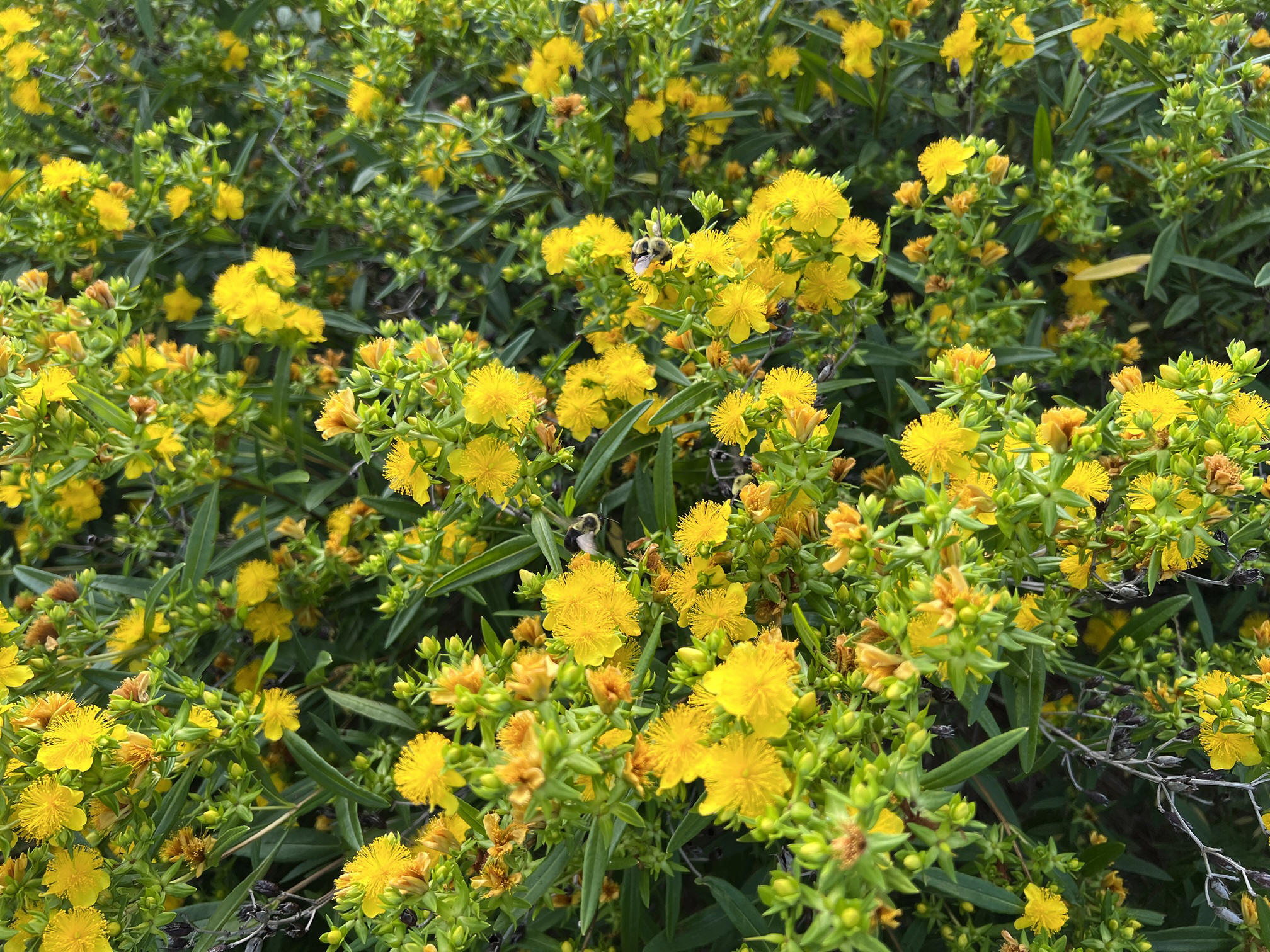
Your garden will be abuzz with bee activity when growing Kalm’s St.
John’s Wort (Hypericum kalmianum). This small shrub is covered with
bright yellow flowers in mid-summer. Grow this drought-tolerant
shrub in full to part sun and well-drained soil.

For moist to wet locations consider
Buttonbush (Cephalanthus occidentalis). Its round white flowers
appear mid-summer, inviting a variety of pollinators to the garden.
Summersweet (Clethra alnifolia) and Virginia sweetspire (Itea
virginica) are two more summer-blooming shrubs that are shade and
moist to wet soil tolerant. Look for varieties of these
deer-resistant shrubs that fit your available space and garden
design.
[to top of second column] |
For dry shade consider dwarf bush
honeysuckle (Diervilla lonicera). This is not one of the invasive
honeysuckles but rather a native plant with yellow summer flowers
and leaves that turn from yellow to orange and red then purple in
fall.
Brighten your late summer and fall landscape with Rose of Sharon
(Hibiscus syriacus). This large shrub appeals to several specialized
bees, prefers full sun to partial shade and is moderately deer
resistant.
Finish off the season with Seven-son flower (Heptacodium miconioides)
considered a large shrub or small tree. You and the many visiting
pollinators will appreciate the late season fragrant white blossoms.
The rosy-purple calyx persists and the attractive exfoliating bark
extends its ornamental appeal through winter.
Protect shrubs that are susceptible to animal damage with an organic
repellent like Plantskydd (plantskydd.com). It is safe for
pollinators and rain and snow resistant, which means fewer
applications are needed. Apply any repellent you select before
animals start feeding and according to label directions for best
results.
Adding bee-friendly shrubs is an excellent way to support these
important members of our community. Don’t stop there. Consider
including some pollinator-friendly flowers in your gardens to
further extend the bloom time and beauty of your landscape.
Melinda Myers has written more than 20 gardening books,
including the Midwest Gardener’s Handbook, 2nd Edition and Small
Space Gardening. She hosts The Great Courses “How to Grow Anything”
instant video and DVD series and the nationally syndicated Melinda’s
Garden Moment TV & radio program. Myers is a columnist and
contributing editor for Birds & Blooms magazine and was commissioned
by Summit for her expertise to write this article. Myers’ website is www.MelindaMyers.com.
[Photo courtesy of MelindaMyers.com] |