|
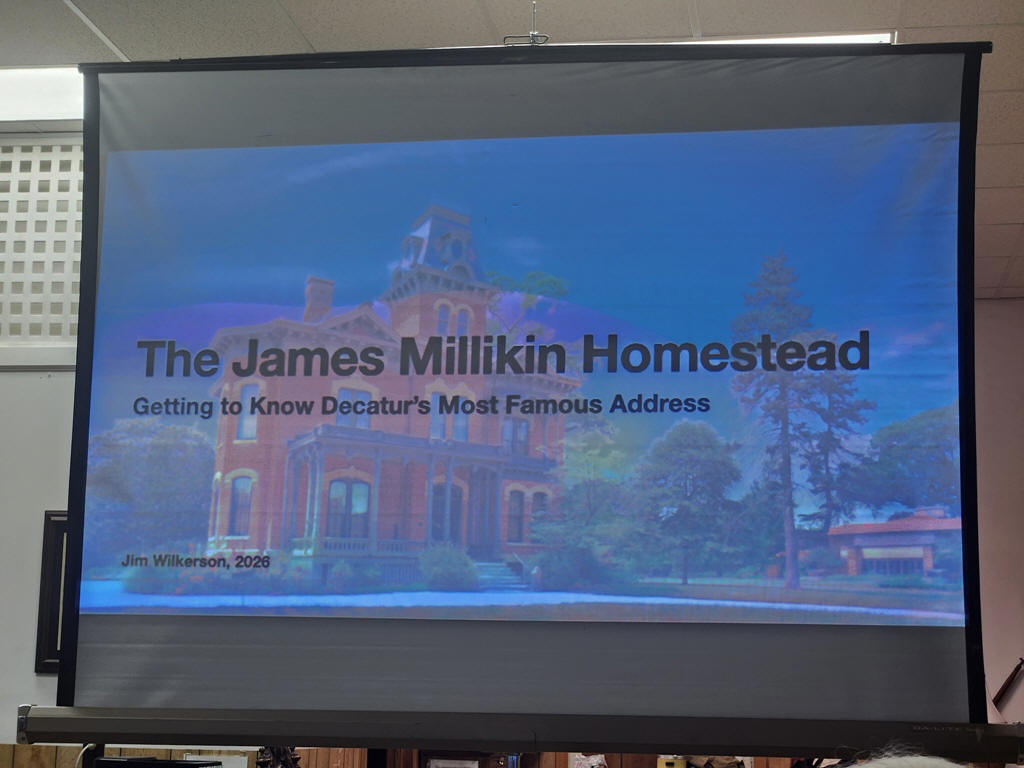
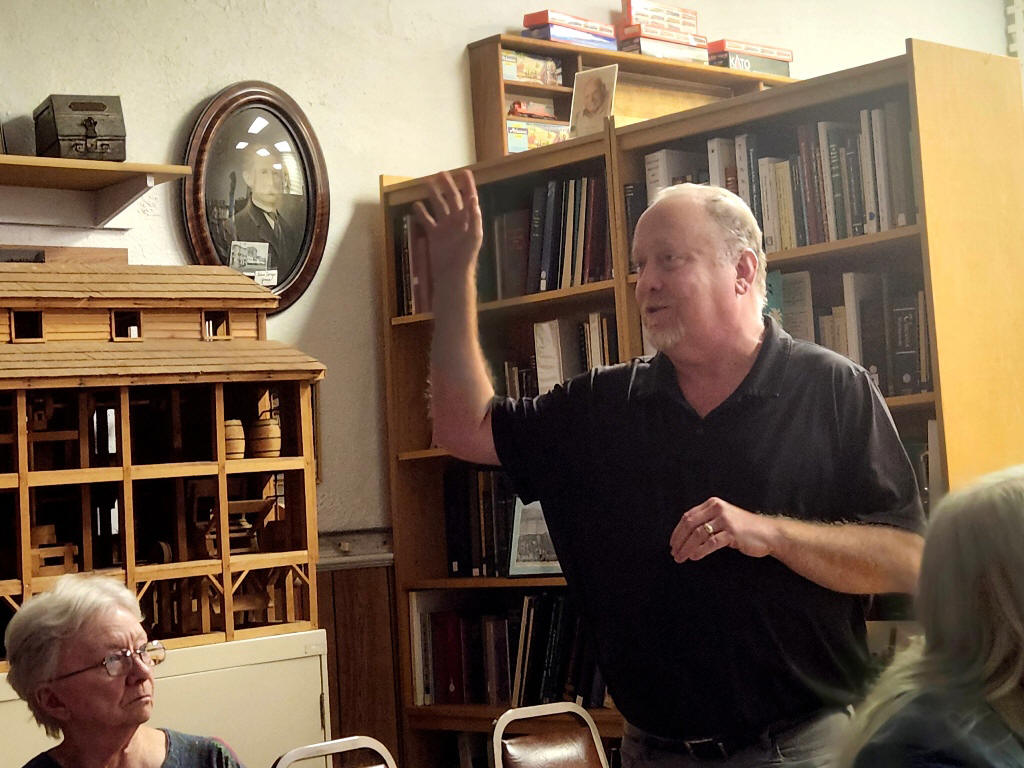
James Wilkerson presented “The
James Millikin Homestead: getting to know Decatur’s most famous
address” at the November 2026 Logan County Genealogical and
Historical Society meeting
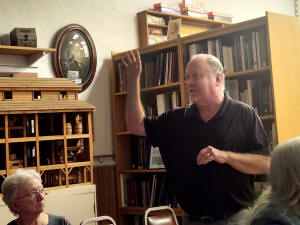
Wilkerson is president of the board
of directors at the James Millikin Homestead and serves as one of
their volunteers.
James Millikin started Millikin University in 1901. Wilkerson said
before that, Millikin was a banker in Decatur for almost 50 years.
Before becoming a banker, Millikin was a livestock transporter from
the Southwest corner of Pennsylvania.
The James Millikin Homestead, located at 125 North Pine Street in
Decatur, is 150 years old. Wilkerson said construction on the house
began in July 1875 and was completed by the spring of 1876. It cost
$18,000 to build the mansion. In December 1974, the homestead was
added to the National Register of Historical Places. James Millikin
died in 1909, and his wife Ann died in 1913 and the house was empty
for a few years.

Wilkerson said during the 1918
Spanish Flu epidemic, the Millikin’s home was used as a makeshift
hospital, and the basement was used as a morgue.
By 1919, the homestead became the Decatur Art Institute, and art was
exhibited in the downstairs. Art faculty from Millikin University
lived upstairs. In 1942, the title of the Millikin homestead was
turned over to Millikin University. The Art Institute closed in
1969. In 1970, Millikin’s Kirkland Fine Arts Center opened.
Once the Kirkland Fine Arts Center was built, the homestead was not
something Millikin felt they had to have. They were not sure what to
do with the home and wondered whether to tear it down or make it
into offices.
Eventually, the Junior Welfare Association in Decatur stepped up and
said they would take care of the home. They raised the money to
renovate the home’s interior.
Over the years, Wilkerson said ceilings and things on the walls
started to deteriorate. When it was an art center, plaster was put
around the fireplaces to make room for more art. The Junior Welfare
Association decided to take the plaster walls down and show the
home’s beauty.

Millikin University remained
responsible for the home’s exterior and grounds.
In 1975, Wilkerson said a non-profit organization called the James
Millikin Homestead Inc. was created.
When the home was designed, Wilkerson said W.W. Boyington was the
architect. The architecture was Victorian Era Gilded age. William
August Fiedler designed the interior with Italianate and second
empire styles.
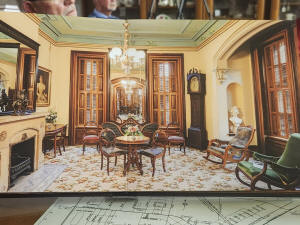
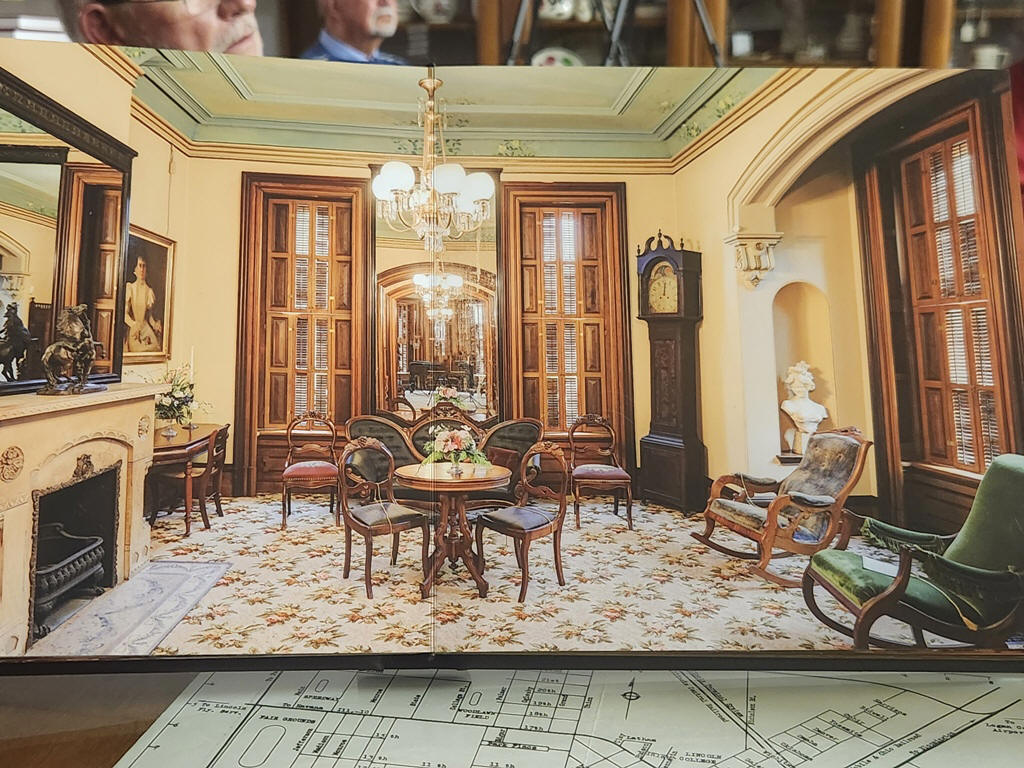
The homestead has five floors with
two parlors, kitchen, dining area, library, breakfast room and
library. The third floor has bedrooms and bathrooms. A carriage
house was built adjacent to the homestead.
There is a ceiling mural, a mural on the staircase, marble
fireplaces and stained-glass windows.
The windows had wooden shutters.
Wilkerson said Anna Millikin thought there would be less dust with
wooden shutters. In the 1970s, new wooden shutters had to be made
because the old ones were in poor condition. The cost for replacing
the shutters was $18,000.
The ceiling mural is the home’s largest art piece and was done by
Charles Holloway, an artist who worked alongside Frank Lloyd Wright.

[to top of second column] |

Wilkerson said the homestead is
now used for education and outreach, arts and entertainment,
exhibits, fundraising, Mr. and Mrs. Millikin Days for third
graders and other special events. People have even had weddings
and baby showers there. Volunteers give private tours of the
home.
In April 2026, a documentary by Wilkerson titled “The Original
Big Blue: The Life and Times of James Millikin” premiered.
Between doing interviews, going to Millikin’s birthplace in
Pennsylvania, shooting and editing the documentary, Wilkerson
spent two and a half years working on it.
The trailer for the documentary says when Decatur “was still in
its infancy” and other titans had not yet arrived, Millikin
“came with nothing but determination and a vision.” Millikin had
grit and purpose and helped build Decatur.
Currently, the estate is valued at $40,000,000. Wilkerson said
James and Anna Millikin were philanthropists who gave a lot to
charity and the estate gives over $800,000 annually to local
Decatur ministries, charities and education.
Wilkerson said James Millikin would travel east to get cattle
and sell them to western farmers. Millikin made additional money
speculating and purchasing land near where railroads were going
to come through.
From 1841 to 1859, Abraham Lincoln practiced law in Danville.
Lincoln sometimes went to the First Presbyterian Church the
Millikin family attended. Wilkerson said the two men likely knew
one another. The two had a mutual friend named Ward Hill Lahman.
Millikin had a connection to Lincoln University too. Wilkerson
said James Millikin promised himself he would establish an
institution of learning if he ever became wealthy. Around 1900,
Millikin told Decatur leaders if they would back a university,
he would donate $200,000 if the city of Decatur would donate
$100,000 and the Illinois Presbyterian Synod would donate
another $100,000.
On April 30, 1901, Millikin University was founded. Wilkerson
said the charter for Lincoln University was amended. After the
charter was amend, there would be James Millikin University with
two schools under it - Lincoln College in Lincoln, and the
Decatur College and Industrial School.
Millikin had purchase land at Decatur’s Oakland Park in 1874 and
the school was built on this site. Wilkerson said the four
initial buildings costs $216,000. Millikin visited schools out
east which influenced the style and brick used for the
buildings.
A committee of women that included Anna Millikin chose blue and
white as the school colors. Wilkerson said these colors were
inspired by Commodore Stephen Decatur’s pennant.
A video Wilkerson showed about Millikin shared more information
about him. When Millikin was a student at Pennsylvania’s
Washington College, he had seen many people struggling for an
education in a little school with limited facilities. Millikin
decided if he ever became wealthy, he would establish an
institution of learning for young men and women of all classes
and conditions to secure a liberal education that would fit them
well for life’s responsibilities.
When Millikin University was dedicated June 4, 1903, President
Roosevelt spoke at the ceremony.
Once Wilkerson was done speaking, he asked if there were any
questions and someone asked about the furniture and how much of
it was left in the house.

Wilkerson said there is not much
furniture they can identify as belonging to the Millikin family.
There are a few pieces left, but he said most of the furniture is
donated pieces. They don’t accept anything unless it is from the
period [the family lived there].
Another question was about the connection between Millikin and
Lincoln College.
Wilkerson said when Millikin wanted to start a university he
contacted Lincoln University and offered the school $50,000 if they
would let Millikin amend the charter. Millikin did that because he
needed a charter.
Public events are posted on the homestead’s
website. You can
also book private tours at the home.
The homestead depends a lot on their longstanding donors. Wilkerson
said one person has also started an endowment for the home.
The Logan County Genealogical and Historical Society is taking a
break for the winter months and will resume their meeting in April
2027.
James Wilkerson shares the history of Millikin University slideshow
[Angela Reiners]
|