|
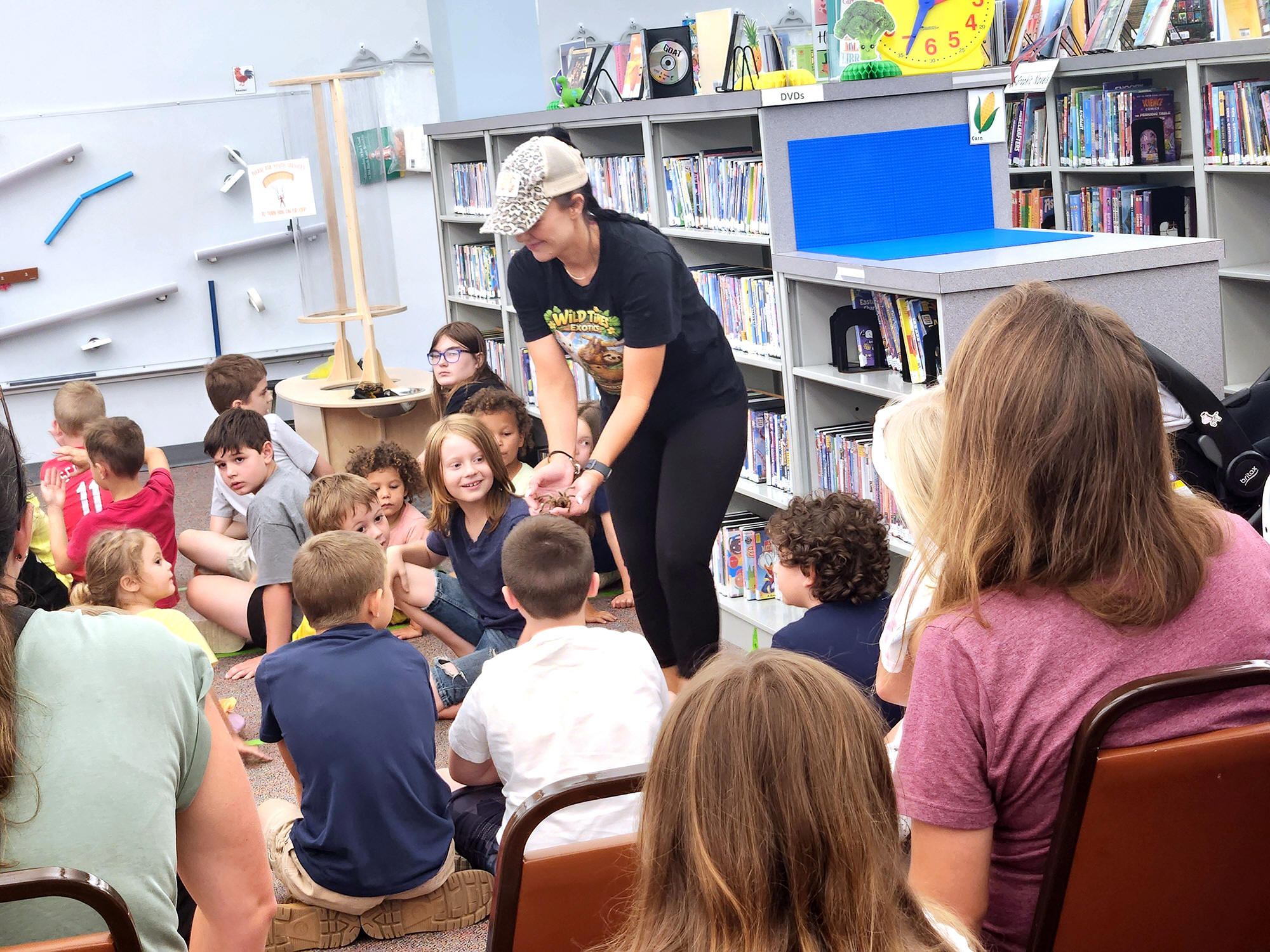
hursday, July 9, at the Lincoln
Public Library, Lacey Wild of Wild Times Exotics brought several
animals, sharing information and walking around the room with each
so people could pet them.
Wild, who introduced herself as Misses Lacey, told everyone they
could touch the animals if they wanted to and cover their eyes if
they did not want to touch them. She reminded the kids not to talk
when she was talking and not to poke the animals, pull their tails
or fur or put their hands in the animal’s faces.
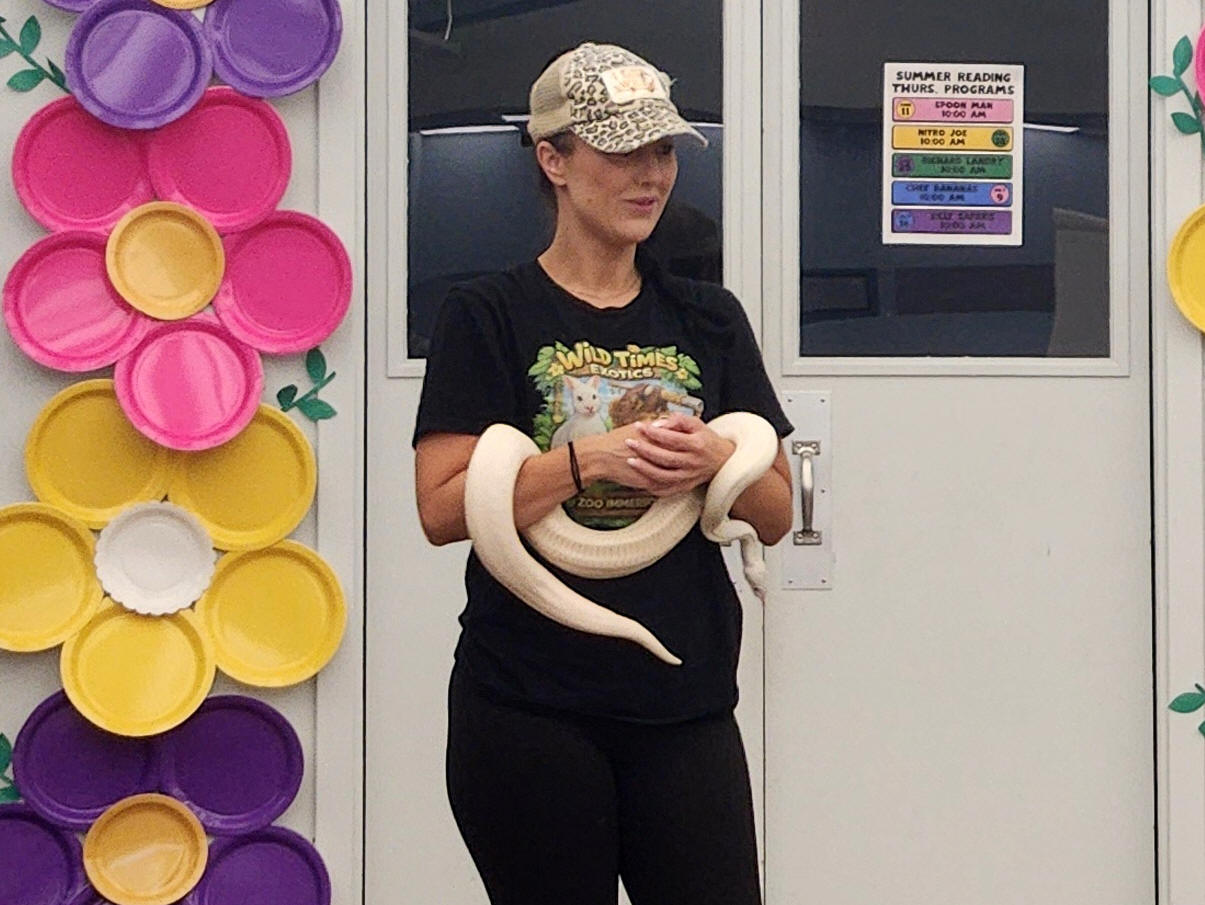
The first animal Misses Lacey
brought out was a snake named Snow White. Snow White is a royal
python, which got the name because hundreds of years ago, queens and
kings in Africa wore snakes around their neck like necklaces. Misses
Lacey asked for a volunteer brave enough to have Snow White around
her neck. These snakes are commonly known as ball pythons rolling
into a ball when they get scared. Those born in the wild are
typically brown, black or tan, which helps camouflage them for
hiding. Snow White lives in a dark cage because snakes like dark
places. Though Snow White is white, Misses Lacey said pythons come
in tens of thousands of different colors. She once met one in a rare
color that cost $75,000.
The ball python’s stomach stretches when it eats, but they must eat
things not much fatter than their body like small mice and rats.
They swallow their food whole and only eat twice a month. Female
ball pythons can be up to five feet long while male pythons can be
up to four and a half feet long. These snakes are not venomous, but
are constrictors, so they wrap their bodies around their prey.
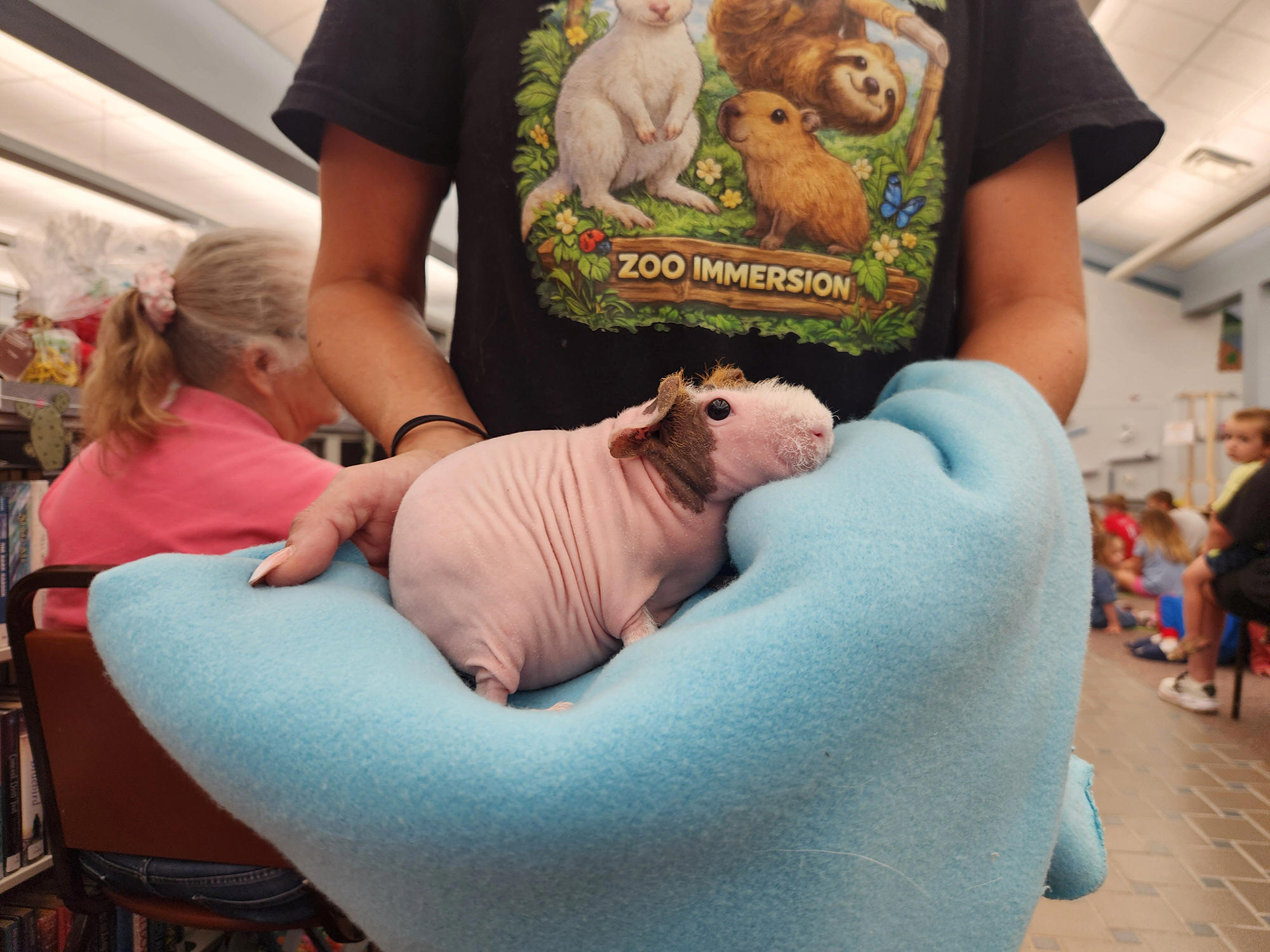
Next up was a skinny pig, who is a
pink rodent named Peppa. They are born with a little bit of fur on
their face, hands and feet and Misses Lacey said not to laugh
because Peppa knows she has a little moustache. Peppa eats a big
pile of hay daily, which is twice as much food as normal Guinea pigs
eat. She also eats corn, watermelon and dandelions and gets vitamin
C every day to supplement her diet. Peppa is fragile and cannot
handle the heat. Being outside on a hot day could cause her to die
of heat stroke. She mostly stays inside and anytime she goes
outside, she must have sunscreen on.
If she is happy, Peppa makes a “whee whee whee” sound and runs,
jumps, kicks and spins around. Skinny pigs are not found in the
wild. Misses Lacey said they were a “science accident” created when
doctors were testing medicines on guinea pigs, one of whom birthed
the first skinny pig. Many now live in zoos and homes. After
everyone had a chance to pet Peppa, Misses Lacey asked for a
volunteer willing to get a kiss from Peppa.
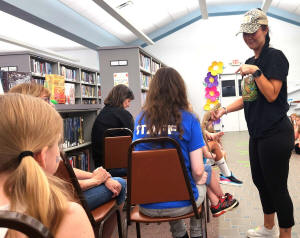
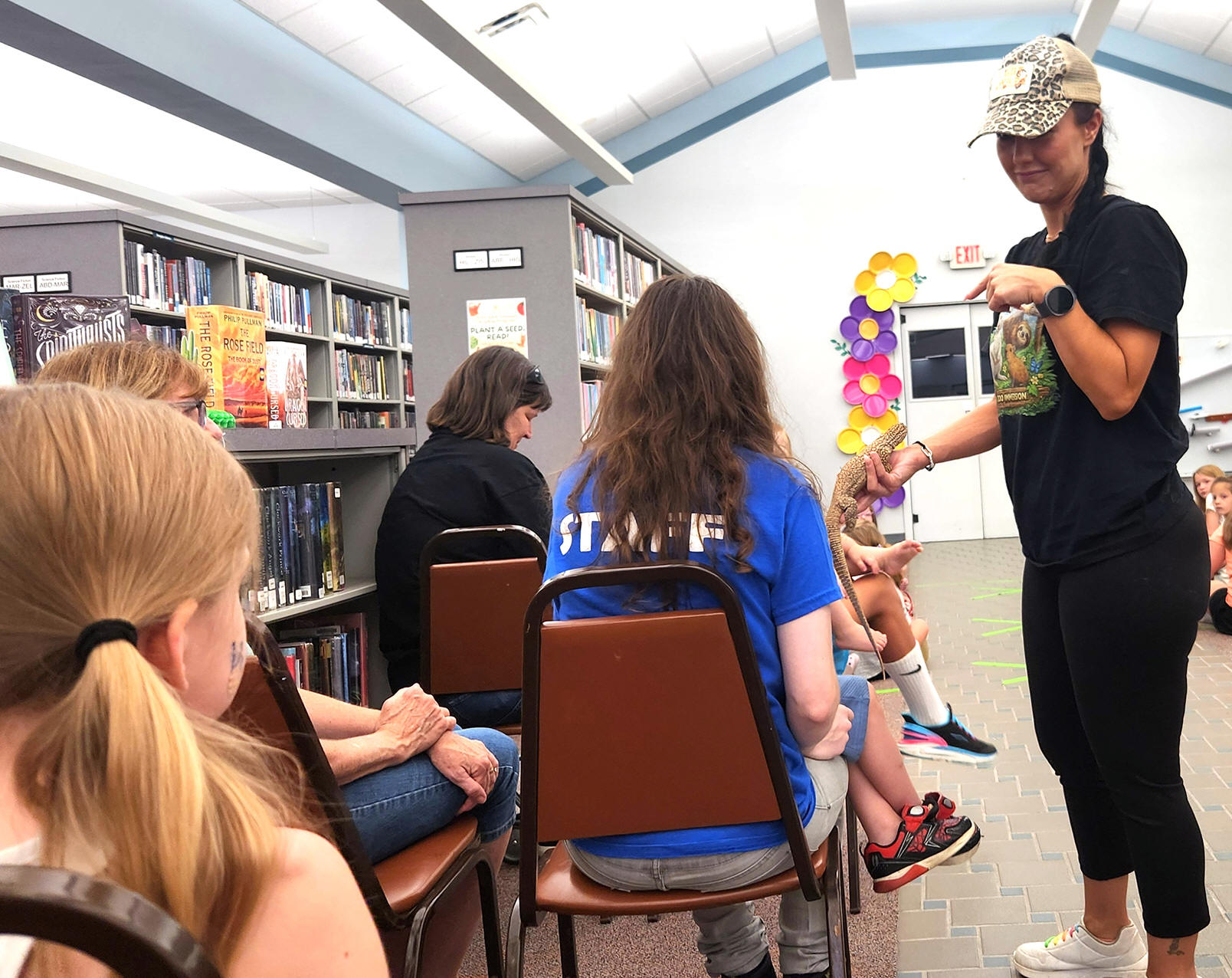
When a red Ackie monitor lizard
named Xerxes was brought out, everyone was told to pet him up and
down his tail. Misses Lacey said the Ackie monitor lizard’s tail
keeps it safe from being eaten by predators. In rocky mountain areas
in Australia, they hide in crevasses with their tails sticking out.
If the predator tries to bite off the tail, it will cause the
predator’s throat to hurt. Ackie monitor lizards can breathe and run
at the same time, which is unusual for lizards. Their tails are
straight out when they run.

Misses Lacey said Xerxes likes
temperatures up to 150 or 160 degrees. His enclosure is around 90
degrees, but there is a warmer area where he sunbathes. Xerxes only
eats small insects like roaches, mealworms or hornworms. Crickets
are not very good for him but are given as an occasional treat.
Though these lizards are not poisonous, they are venomous and may
bite or sting people. When people are bitten, they will just bleed
for a while.
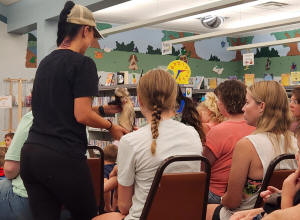
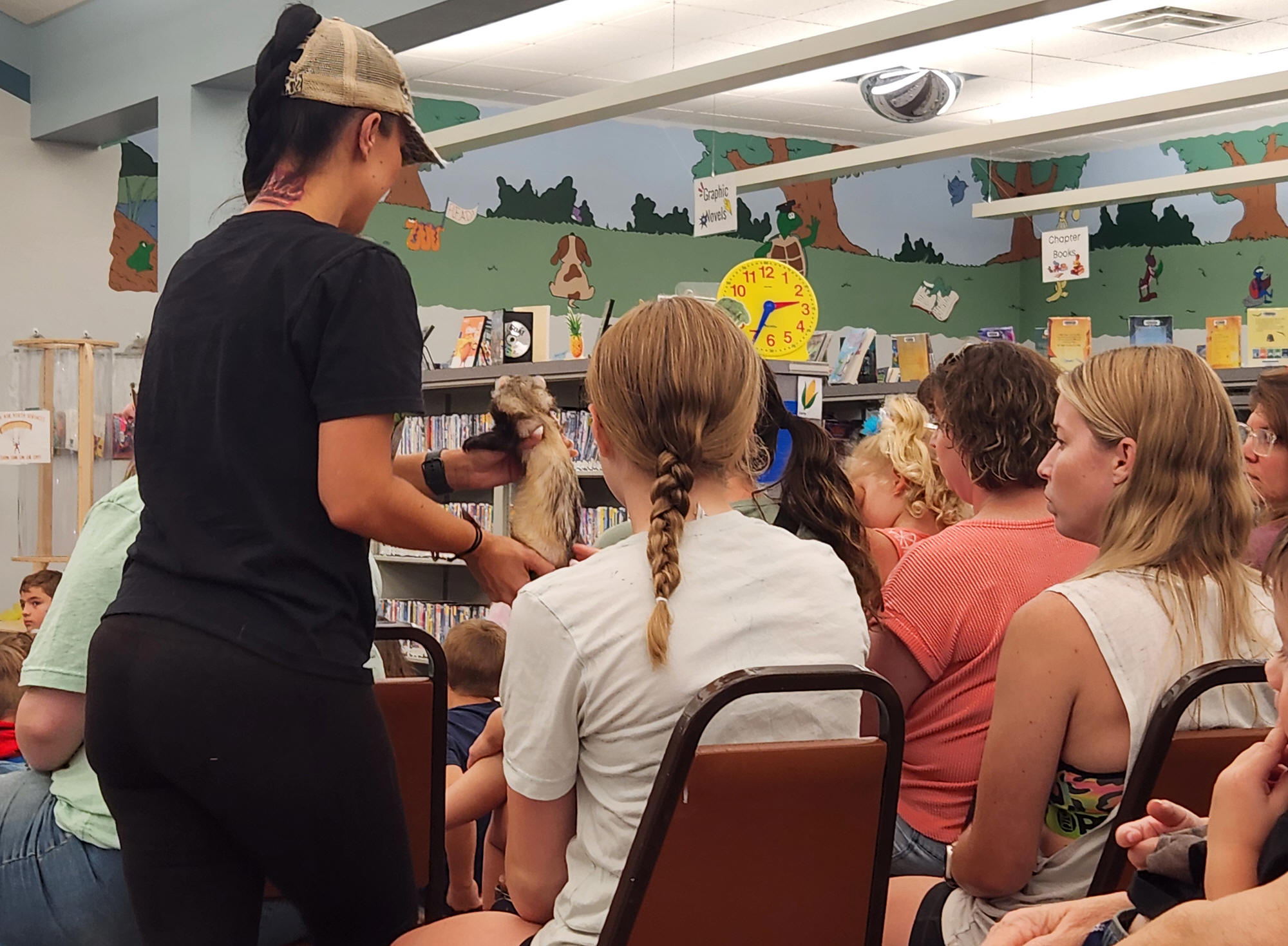
Freda the ferret was a very shaky
animal because of a disease. Misses Lacey said in 2021, Freda was
found running loose in Springfield and was very skinny and covered
in bugs. She was taken to a veterinarian to be checked out and has
“tattoos,” which are dots on her ears, showing she was spayed and
de-scented. The only time Freda was bathed was when Misses Lacey got
her. Frequent bathing can make a ferret’s skin oily and stinky.
Ferrets use litter boxes like cats do.
[to top of second column] |

Ferrets only eat meat. They are
dangerous hunters who farmers and gardeners used to get rid of
problem animals in their garden. Their flexibility helps them
squeeze into tight spaces. Freda is one of several ferrets at
Wild Times Exotics as they are social animals. The ferrets sleep
so deeply, Misses Lacey said it can be hard to wake them when
she wants to take them to events. She has to make sure their
hearts are still beating.
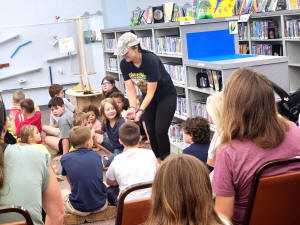
Charlotte, a venomous tarantula,
was the next animal. Misses Lacey said Charlotte is not dangerous.
She placed Charlotte on her daughter’s forehead when her daughter
was two months old. When tarantulas see predators, they put their
legs or abdomen towards the predator and scratch their hairs into
the predator’s face. They may even bite, but no one dies from being
bitten by a tarantula. With their hairs, the tarantula’s legs are
like fishhooks. When they molt or get injured, they may lose a leg,
but it can be regenerated.
Two daring volunteers let Misses Lacey put Charlotte on their
foreheads but asked her to remove Charlotte after a few seconds. One
mom allowed her to put Charlotte on her baby’s head and the baby
stayed very calm. Charlotte lives in a small cage where she can see
everything around her. As Charlotte was taken around the room,
everyone was told to rub her bald spot just once with one finger.
She is a female rose haired tarantula, which are hard to find.

A two-year-old chocolate colored
skunk named Dolly Parton was one of the last animals to be brought
out. She was born at a facility in Indiana and has been de-scented.
Dolly eats food like chicken, eggs, yogurt, cottage cheese and small
vegetables. Dolly Parton even uses a litterbox.
Skunks also like to eat mosquitoes and ticks they dig up. Skunks in
the wild often die before they are three due to becoming obese and
getting diabetes from eating too much. Skunks that are taken care
of, and have a healthy diet, live much longer. The first skunk
Misses Lacey had was Flower, who lived almost ten years.
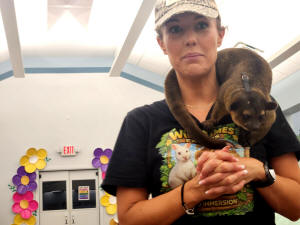
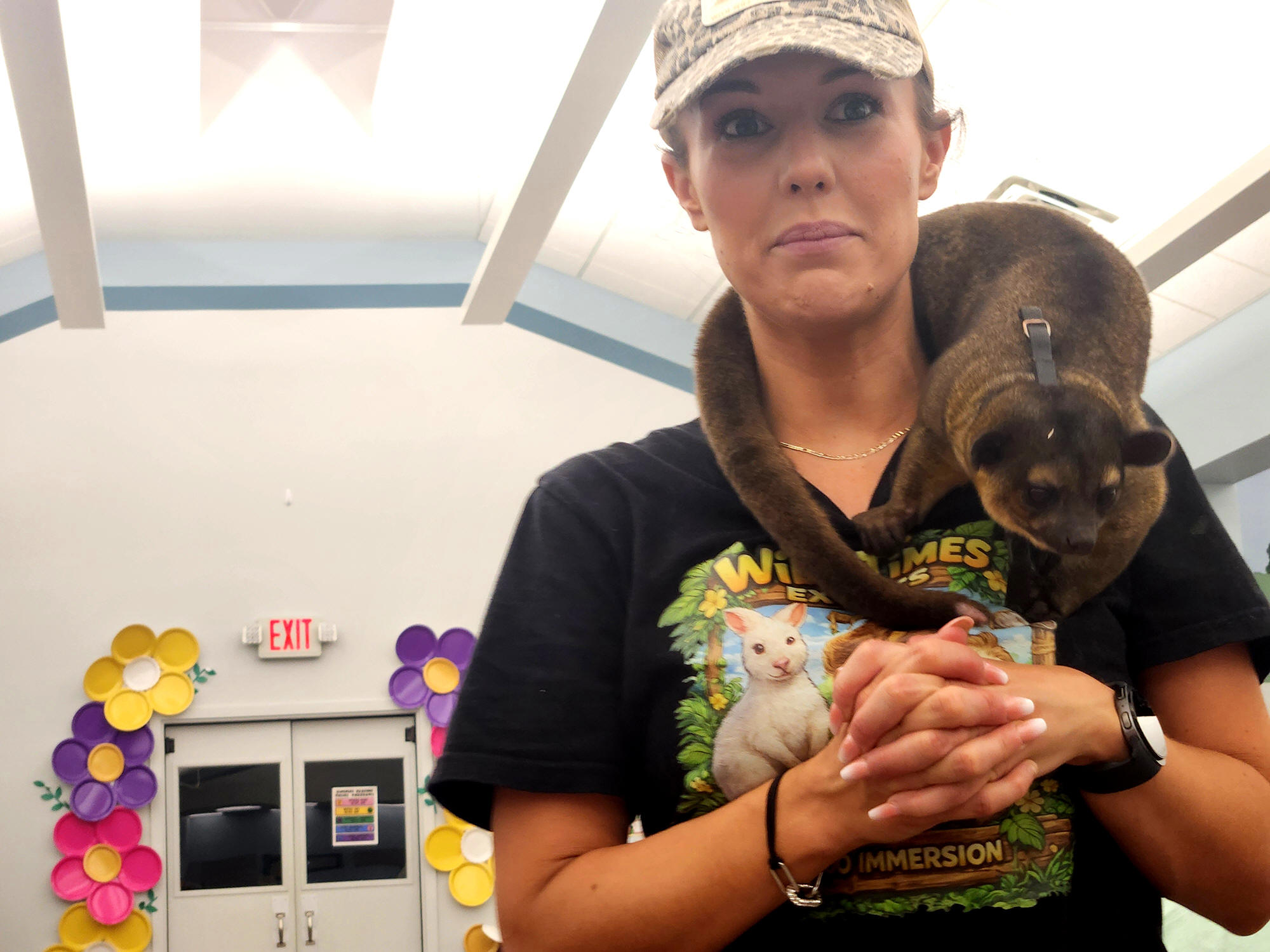
The final animal Misses Lacey
brought out was a kinkajou honey bear named Ruby Sue. Ruby Sue is
almost nine years old. Misses Lacey has had her since she was only
two months old. Kinkajous have five inch long tongues that help them
get honey from beehives and flowers. She likes treats such as
blueberries, grapes, dried cranberries and bananas. Occasionally,
when they are out and about, Ruby Sue gets treats like gummy bears,
gummy worms and marshmallows.
Kinkajous are nocturnal and are related to raccoons. A kinkajou
attacks when people get into their territory. They may bite, attack
and injure people, which sometimes requires people to be
hospitalized. Some people have even died from the injuries. Ruby Sue
and her “boyfriend” George W. Bush Baby are in the same enclosure.
If Misses Lacey accidentally leaves one of the nine locks on the
enclosure undone, Ruby Sue will get in her hand in there and open
the other eight locks. The two kinkajous will demolish the area.
George W. Bush Baby just tags along for Ruby Sue’s mischief. He is
half Ruby Sue’s size and sometimes rides on her back.
As Misses Lacey ended the program, she thanked everyone for coming.
Next Thursday is the final summer program and the popular Silly
Safaris will return with several exotic animals. Children’s
librarian Donna Cunningham reminded everyone to get all their book
logs turned in by the end of next week.
Lincoln Public Library hosts Wild Times Exotics photos slideshow
Lincoln Public Library hosts
Wild Times Exotics and Dolly Parton the skunk video
[Angela
Reiners]

|